Tell me who really are you today? Who would you love to be in 12 months time?
The two-part question I remind entrepreneurs often highly emotional about the sale of their business, and who see their “loss” of identity indelibly wrapped up in the sale.
For those not used to personal reflection, it is often an uncomfortable question. Why? The person they see in the mirror each morning, is not who they really are today or would obviously be a person of high interest to others that they’d love to be a peer of or pursue common interests with.
They see themselves as excessively defined by their “past” (war stories, success and the scars) rather than their ability to transform someone else’s ideal future. Mindset.
Many people in the midst of buying control of an existing or launching a new business, see it as a sequential “process”, I don’t. It is a series of interconnected issues that need to be performed in parallel.
If you must submit and gain approval from a regulator that should never stop you proceeding with your pre-launch work or withholding investment investment in key components of the “new business” (capital, people, triaging client and prospect lists, readying marketing plan, technology, resources and so on)? The only caveat is where the regulatory process strictly states you cannot engage with individuals or access proprietary data.
If that “hold up” with regulators, many of whom are short-handed or struggling with a 15 month backlog, is no longer 4 weeks but now 8 or 16 weeks, it is madness to “down tools”. Yet increasingly, I am seeing both new and experienced executives and entrepreneurs doing exactly that while bemoaning their fate. Keep moving forward fast!
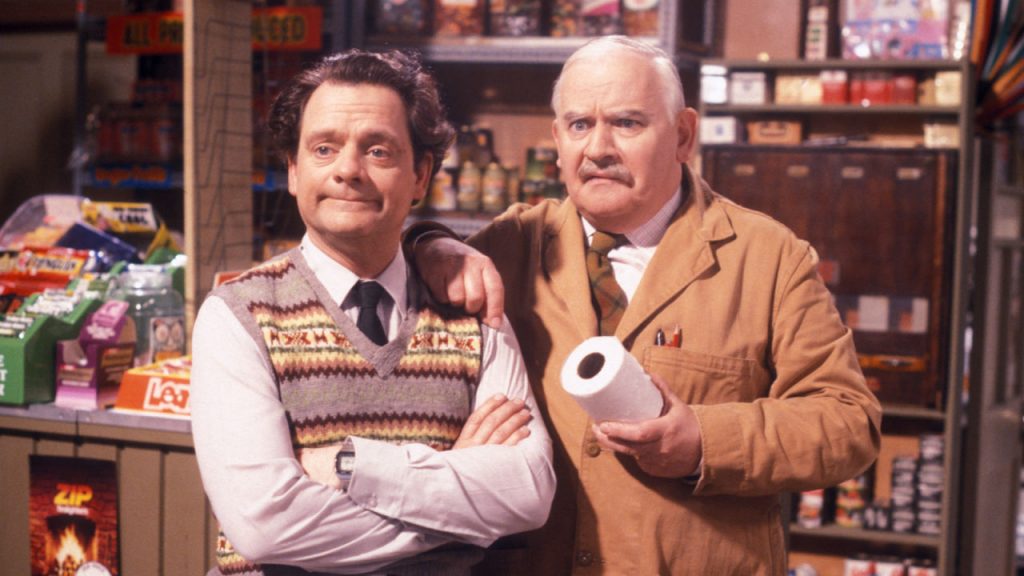
Fans of the BBC’s Open All Hours, will recall eccentric customers, who came into the store, and a wonderful verbal joust between Albert E. Arkwright (the incomparable Ronnie Barker) and his down-on-his-luck nephew Granville (a youthful and talented David Jason). A reason for local neighborhoods to exist, customers to shop and buy both essential and non-essential products and services.
Here in the UK owners of small businesses in their local high streets are busy throwing open their doors to customers force-fed on a diet of backlit screens and Amazon deliveries for large parts of this past year. Yet to the naked eye, “open” would not be the word to describe the customer experience in many local businesses in the UK’s East Midlands this week. They are:
Unwilling or unable to accept payment from their best customers over the phone.
Unwilling to offer their older clients priority for beauty, hair and other much needed appointments for 2+ weeks when their need is discernibly greater than other age groups.
Using the opportunity to impose new £30+ administration fees on insurance, wealth management and other local professional advisory services without any additional value for their best clients (new head office practices).
Insistent their customers run the gauntlet of “Wet Paint” signs during peak shopping hours.
Failing to update their “temporarily closed” signs on their website and web listings, and their opening hours.
Insistent on customers physically coming into their shops when the world has co-existed for 12 months on Zoom/Teams etc resolving all manor of complex problems.
Unwilling to call customers when “out of stock” items finally arrive in the shops.
Unwilling to properly vacuum Post Offices and clean bank counters yet demand that all customers must sanitise their hands on the way in and way out without fail and wear masks or face a £100 fine.
Given zero support by local councils (reduced parking charges, advertising and promotion) despite some shopping precincts feeling like Tolyatti. Perhaps the Council is on furlough?
Constantly competing with the sound of drilling, pavements closed, and road construction, when local councils have had 12 months to get this done.
Spring is in the air. The daffodils are in bloom, the lambs bleat in the surrounding fields and the temperatures are warming in the Northern Hemisphere. Yet why are some people so hesitant or hunkered down, awaiting for a day when they can do business again, exclusively in-person?
Perhaps it reveals more about their inability to adapt and profit from change, and to seek solace in how the world isn’t as it should be and how inhibiting that is for them personally.
Why are you doing the client’s “heavy lifting” (routine tasks, capital and labour intensive work)? Is it what they actually value about your expertise and need today or you think they value (past feedback) because of a past need? A great many businesses, who remain unwilling to ask themselves these uncomfortable truths, think they are “safe” in the same old activities when the exact opposite is true.
It is not what you say, it is where you say it and how your audience is personally better off or better supported that matters.
In the wake of changes to US state voting laws, several CEOs at global firms (Ed Bastian at Delta, James Quincey at Coca Cola, Peter Zaffino at AIG) have taken it upon themselves to vocally express their views. To use business, and digital media outlets (LinkedIn etc) to convey their message.
What is less clear unlike MLB, is what meaningful steps (time, money and energy) that they are personally committing to their desired outcome.
Some critics have taken umbrage at the viewpoints, others at the inappropriate use of these platforms, which they perceive are reserved for “business”, not personal or party political viewpoints.
My question is where do CEOs draw the line at speaking out on social and other injustices? Who gains and who loses? Is it blindingly obviously in their shareholders, Boards, customers and employees self-interest for them to personally join the debate, and take firm positions? Are their firms’ and their own personal behaviour now “fair game” on all matters, wherever they do business globally or the private interests that they personally pursue? Do they have the competency and passion to participate in a two-way conversation or are they simply “posting” views (symbolic), and denying others a response? Who is advising them?
I don’t have answers, as I suspect, most CEOs don’t, to many of these questions.
What is patently obvious, is you cannot be taken seriously unless you are fully engaged in a two-way dialogue, and are seen as an expert in the topic under discussion or you make it clear that there are others better positioned to opine, on these matters. There is no “halfway house”.