In the mid-nineties in New York, I’d regularly see a lycra-clad Sigourney Weaver on the treadmill in our unglamorous Upper West Side gym. No frills, totally unremarkable, a native New Yorker going about her daily exercise. Fast forward to today, I routinely see Hugh Grant and Elizabeth Hurley in our neighbourhood doing the school run, sitting in cafes and visiting Italian delicatessens. We are led to believe the times are different, celebrities today care more what others think about their lives. They really don’t. They are only interested in the life that they choose to lead. In that respect we are no different unless we insist on benchmarking our self-worth against others, however, unrealistic that may be.
Once a week I receive a request from an entrepreneur or investor proposing an equity arrangement in lieu of cash for my expertise. Ask yourself do I possess sufficient control and power over the desired outcome (my financial return) to “guarantee” success? In most cases, you don’t as much as others might convince you that is the case.
Then, what is the impact on my cashflow, time and enjoyment if I do accept the offer? The shiny reward is often very clear, what is less obvious is the probability, and seriousness of the downside risks, and the very real consequences for the life that you are seeking to lead.
There is a growing cadre of people, who use a multiplicity of titles in multi-family offices, private banks, private investment offices, corporate finance advisory firms, HNW investment platforms that are nothing more than “business brokers”. Run!
To the uninitiated entrepreneur, they are fully regulated, credible and talk about the huge depth and breadth of their advisory network. Their opaque approach is to “rent out” their cookie-cutter services, prepare investor bait, and line up as many unsuspected bodies as possible, as potential buyers or investors in your business in the shortest time. In return, they may request a modest upfront fee alongside a 4-6% success fee (capital raise) or a 2.5 – 4% fee in a business/real asset sale for their services (preparing your investor marketing materials and running a “process”), or purely agree to work on a contingent fee basis.
Ask yourself, how could I build a professional, ethical and reputable advisory business on that basis? The answer is you need “high volume and high client churn”. Cutting bait, and commitment, if not contractually, with a client fast when there is no immediate and serious investor interest. Then, ask how is that in my (entrepreneur’s) best interest in a highly complex and ambiguous situation? If they fail, I am hurt financially but their only loss is time.
If you are still unsure, ask them to show you details of their contractual relationships (“skin in the game”) with other entrepreneurs as clients, investors and intermediaries (mandate, exclusivity periods, revenue sharing). A lot of these brokers are seeking to use you, to build their own investor network, irrespective of your success. They will hurt your brand, your investment credibility and waste extensive time. A lot of these people claim to know or have investor relationships they really don’t have. Ask to speak to not just to those entrepreneurs and investors they have had success with but crucially, those they haven’t.
Ahead of a meeting with a potential investor, to what extent have you thought about the mystery that lies in your entrepreneurial “past” and the relevant application of it to your investor’s immediate future? It is fine to be translucent, probably unhelpful to be opaque and not necessary, to be transparent.
For example, an investor would “think” they know me well after a google search through my website, blog, newsletters, public speaking, media contributions, podcasts, published articles, company accounts, social media, and perhaps talking to others. What they wouldn’t know, or at least they’d have to dig very deep, is many of the experiences that have shaped my understanding of the complexity and ambiguity in pulling off successful private company investments:
Lesson No. 1: In October 1982, “bad losers” make terrible investment partners, and friends or acquaintances, who are “bad losers”, are to be avoided at all cost, especially when you are the smallest kid in the class! Trying my hand at an early entrepreneurial endeavour selling horse racing tips (£5 for a series of “Tiny Tips” three Saturday Nap selections), while a teenager at boarding school, I received zero credit if they won and untold grief, bordering on physical abuse, if they lost.
Lesson No.2: In March 1992, most business risk management plans make appropriate allowances for catastrophes (hurricanes, earthquakes, wildfires) and with time businesses can rebound but rarely, do they consider the subtle changes in human behaviour and the grave consequences. That thought occurred to me while part of a deposition team seeking to reconcile the impact of a ponytailed fiftysomething psychotherapist, sitting in front of us, who had “groomed” five of his patients to have sex with each other, as therapy. A Boulder, Co. clinic, 8 partners and a practitioner with a 30-year exemplary record, destroyed in an instant, and my employer, his insurer, forced to payout US$10.7 million bucks.
Lesson No.3: In late February, 1999, no amount of money can turn an entrepreneur’s vision into an organisational reality without the requisite judgement and talent. Here I was whisked from a dusty landing strip in the Grenadine island of Canouan, to a meeting with Antonio Saladino, the urbane Swiss-Italian founder of a luxury hotel and resort development (today transformed by the stylish hands of Irish tycoon, Dermot Desmond). Flirtatious blondes, Donald Trump, unexplained investors, gargantuan real estate development and the uprooting of an entire fishing island culture all with Grenadine ministerial approval. Very Ian Fleming. Modelled on Porto Cervo, Saladino’s plans went awry over failed assumptions about buyers of the luxury villas, the prime guest market (wealthy North Americans, not the bejewelled Europeans he spoke of), and how to mitigate the impact of commercial airlines suspending scheduled flights (no meaningful plan B or C).
There is a hundreds of other rich and humorous stories I can talk to investors about, many not for publication. All help to shape my skills, behaviours and expertise. What could you use to create a seductive rapport with your ideal investor?
Most economic downturns are rarely accurately predicted. Yet we see daily in the business media, eminent business, banking and private equity figures, sending out warnings. Could it be that it says more about them and their own fears (loss of status, wealth and job security) than their real concern for the rest of us? After all, they would surely have less to fear than most of us in a downturn and stronger defences? I don’t recall seeing many of them worrying about anyone else in the good times and other than the great fortune on their doorstep.
We are in that self-congratulatory quarter of the year when the film and entertainment industry goes into overdrive. A time when award winners, particularly in Hollywood, have to “speak out” to protect others’ lives. When those watching know it is all an affectation to satisfy their own ego, career and global viewpoint, nothing more. Move on.
How many unsolicited referrals or other surprises (invites to networking events, speaking opportunities, media/PR opportunities) have you received since New Year? Do you want or rather need more?
Ask yourself, when did you last meet or call the 25 best sources of new ideas for your business growth in the prior 3 years? I am not talking about email or reading and responding to posts on social media. I am referencing unfettered time spent together in a business or social setting. I bet for some reading this the response is weeks, months or even years.
Given the quantum of changes happening within your organisation and externally with your clients, is that wise? Make a note in your physical or electronic calendar, to call and set those meetings up at a rate of 10 calls per week.
My guess is that within the month of April, you will have more opportunities than the entirety of the first quarter of 2019.
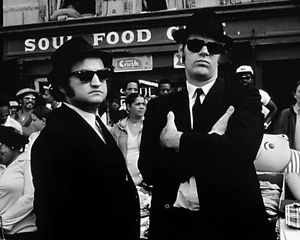
So you want to put your old team together, do a few gigs with past clients, get some bread? Bang! Five million bucks.
Here is the litmus test for those aspiring corporate executives and entrepreneurs seeking to “go again” in a new corporate or entrepreneurial venture, based on hundreds of situations I have been privy to:
Do those market needs that were fundamental to our past success exist today? Can we anticipate market needs for our expertise resulting from impending changes in technology, regulation, demographics, distribution, capital flows and so on? Can we create new market needs for our expertise that our clients have not thought about before?
Do we collectively possess superior capabilities to address those needs in today’s and tomorrow’s marketplace, not in a prior existence or environment? For example, in an electronic trading environment, a commodities or an insurance broker’s past competitive advantage – their interpersonal competencies (face-to-face negotiation) and “black book” of contacts – has been significantly eroded in this century. Equally, success in a large corporate setting is notoriously difficult to replicate in a small entrepreneurial business, irrespective of time (skills, behaviours, expertise).
Do we possess the requisite enthusiasm today, and in future, to undertake the work? In other words, are we ignoring the fact that our colleagues aren’t the same people they used to be 3 or 30 years ago. We are constantly changing, as is our interests, courage and risk tolerance.
Only in the movies to paraphrase Elwood, are you not going to get caught out if you cannot sincerely answer “Yes” to all of the above unless you believe you are on a mission from God!
Do you know who, in a business setting, your prospective business partners are “sleeping with”? I include those that they have formal alliances with and those that they have informal ties to, and the obligations inherent in those relationships. I raise the point because often in an unstructured transactional setting with ultra high net worth individuals, a full or partial sale of a business or an asset may involve culturally diverse parties, an extended chain of communication and overt secrecy. Time is short and excitement rises fast, what is not said (taken on trust) or not researched may be more important to your future relationship (loss of power and control) than what is said.
“What was in it for you?” The reciprocal promise (future reward, referral, advice and so on) most people seeking “free help” in for-profit businesses rarely fulfil (no commitment, no urgency, no need), and those offering it, rarely hold them to account on. Sound painfully familiar?







Downturn Reality
Thursday, February 21st, 2019Most economic downturns are rarely accurately predicted. Yet we see daily in the business media, eminent business, banking and private equity figures, sending out warnings. Could it be that it says more about them and their own fears (loss of status, wealth and job security) than their real concern for the rest of us? After all, they would surely have less to fear than most of us in a downturn and stronger defences? I don’t recall seeing many of them worrying about anyone else in the good times and other than the great fortune on their doorstep.
Tags: business, forecast, social commentary, wealth
Posted in Are You Thinking What I Was Thinking | No Comments »