Posts Tagged ‘high growth market’

James on Insurance Tech and Corporate Venturing

Monday, November 30th, 2015

Wyn Jenkins, Managing Editor of leading global insurance media publication, Intelligent Insurer, interviewed James about the 675% increase in capital flowing from global insurers into corporate venturing since 2013 in search of the next Uber.

Surfing The Corporate Venture Wave

http://ow.ly/Vih0A

Rates of Interest

Friday, September 18th, 2015

What do rising interest rates mean for your clients’ future (incr cost of capital, incr saving, reduced profit etc.)? What does the pace of rising interest rates mean for your clients future (impact on business objectives, market assumptions, competitive position)? What should the quality of your clients’ response to rising interest rates look like (business model changes, people’s skills, market position etc)?

If you are not thinking about how your clients must change their own thinking and self-talk, you are probably missing the most obvious immediate new business opportunity in the next 12 months. Put in on the agenda at the next client meeting.


© James Berkeley 2015. All Rights Reserved.

Are You Thinking What I Was Thinking V

Tuesday, March 24th, 2015
  • No one really knows when markets valuations are at a “peak”, most commentators and investors (Prem Watsa, Sir Michael Moritz and others) are merely applying “gut instinct” like the rest of us
  • After 7 years of “easy money” is it a surprise that we have record market prices (stocks, art and so on)
  • More people have lost money calling a market collapse than a market rise, be careful who you listen to
  • Well run businesses with strong “real” earnings and high quality management and employees will always outperform in the long-term those firms that lack those attributes
  • When retail and institutional investors have greater access to information and knowledge in real-time at less cost, why should tomorrow’s investment cycle follow yesterday’s cycle? We live in a different age.
  • With “real” unemployment and the growth of start ups in many G20 countries at near record levels, wouldn’t policymakers, politicians and media be better off talking more about our “future” prosperity than our “past” grievances
  • When I read polls suggesting  that electorates are more “disengaged” with politicians and their political parties than ever before doesn’t that tell us more about our own fears (education, self-improvement, reinvention)?
  • When you study empirical evidence, we are probably living in the most prosperous and safest decade in the past 100 years, why doesn’t it feel like that when I turn on the television news or pick up a newspaper
  • We are right to be concerned about the legacy we are leaving our children (underfunded entitlements, increasing complexity, wealth gaps) but we rarely reflect on how much wiser they will be than us (technology, health, education and other improvements)
  • We look too much at the rise of China, India and other high growth markets as a threat, when we should consider it as an opportunity
  • If you are well positioned (investor, business or employee) in healthcare, education, technology, travel and dare I say it in financial services, you are in sectors with 10 years of very strong growth
  • How many cases can you point to where great regulation has saved us from a downturn? Wouldn’t we better placed putting the onus on executives to show good judgement rather than leave it to our politicians and mandarins to tie them in knots?
  • We confuse largely “symbolic” action (an executive foregoing a bonus) all too often with “meaningful” improvements (smarter strategic decision-making, hiring better quality management and employees)
  • We “deify” celebrity leaders (Jack Welch, Sir Alex Ferguson, Sir Richard Branson) and often overstate the transfer value of their “unique” approaches. In other words their ideas were perfectly suited to the prevailing conditions in their environment but those same conditions rarely exist or in the same order in our own environment
  • Wouldn’t we better served by harnessing the power of “Big People” (an ability to apply knowledge more wisely) than “Big Data” (carving out granules of worthwhile data that must be formatted into meaningful information)?
  • In the hype around Uber, Lyft, Xiaomi and so on why are commentators, investors and analysts not asking more vociferously why so many multinationals failed to exploit these sources of innovation when they were in a far stronger position to do so? Is the boom in corporate venturing a recognition that management in many large multinationals have given up on finding hidden gems within their own business?
  • Twitter and other social media ads, why would they take precedence for a B2B business over boosting the number of peer referrals obtained from existing clients? Don’t get lost in the consumer hype.
  • When did your firm last buy from a cold caller? Wouldn’t those sending spam SMS, email and print flyers be better served attempting to forge a trusting relationship with real buyers? Perhaps they are not very bright.


© James Berkeley 2014. All Rights Reserved.

Identifying Profitable Growth Opportunities

Wednesday, March 18th, 2015

Here is a six areas that any business large or small can quickly apply in search of profitable growth opportunities. I am talking about raising performance levels to new heights not merely solving problems and returning to levels the business used to be at.

  1. Client growth. Can you anticipate a need your client has for forward-looking help and develop the competency to quickly address that need with modest investment? For example, “invisible” cyber attacks will grow exponentially and organisations will need both preventative (more robust risk management) and contingent (insurance) to protect their clients’ data and their brand’s reputation.  If you provide only the latter, you would be well advised to consider how you also provide the former.
  2. Market growth extension. Is there an existing market need for your firm’s products and services where you can build on the momentum of yours or your competitors success beyond original market expectations? For example, can you find new buyers within an existing client with highly similar needs residing in another region or function? Can you easily get a testimonial or glowing reference that would accelerate the speed of closing the sale with new buyers.
  3. Capitalising on others failure. Is there a market need you can create for your products and services, which is based on the unplanned failure of a competitor? For example, private sector insurance of coastal property in places like Florida became so hazardrous in the 1990s that many homeowners were forced to seek coverage from the State when the private markets dried up. With more robust data, pools of capital and technology today, private sector insurers are now willing and able to offer insurance coverage at competitive terms.
  4. Reconfigure technology. For example, most business telephone banking systems create huge work loss for the customer (speed and quality of resolving an issue). How long before a multi-function aid is created that enhances the quality of the communication and the relationship between your firm’s banker and you?
  5. Personalisation. Can you create a product, service or relationship that is more tightly customised to your clients needs and in so doing allows them to make more informed lifestyle and business choices? For example, Microsoft will launch a band later this month that will allow the user to record the quality of their sleep, their heart rate and routine calories burned. In turn allowing people most at risk of illness or injury to adapt their behaviour (no waits for GP pulse rates, real time access to lifestyle information, more intelligent expenditure on nutrition, fitness and well-being etc).
  6. Social & Demographic Changes. Can you anticipate the impact on your clients intellectual property from changes in education, income, age, health, residence and wealth? Can you anticipate the frequency of and ways in which your customers want to interact with you that previously were hard to organise (technology)?  For example, the essence of life insurance and pension underwriting is the ability to accurately predict how long we will live and when we will die, and to create products (annuities) that spread income over that period. When public perception moves towards greater personal responsibility for our future rather than reliance on the State, is it any wonder when for example governments as they have in the UK abandon the requirement for employers to provide an annuity as part of an employer-sponsored retirement plan.

© James Berkeley 2014. All Rights Reserved.

Are You Thinking What I Was Thinking IV

Thursday, January 29th, 2015
  • Apple announces record quarterly profits and unprecedented growth in China and news organisations (BBC, CNN, CNBC) immediately fire bullets at the Company’s tax policies rather than celebrate or understand their success
  • 50 years on from Winston Churchill’s death I am hard-pressed to nominate a world leader today who is fit to tie his bespoke John Lobb shoelaces
  • In a era of big data and predictive analytics our ability to predict catastrophes accurately (winter storms in New York, radical Greek political machinations and so on) is still very suspect
  • We rush to judgement on so much that we know so little about (celebrity relationships, diets, climate change)
  • We omit to think about and take action about matters we know an awful lot about (our own behaviour, our state of overwhelm, our time management)
  • There is 256 variables that life insurers apply to determine your life expectancy, at any one time we probably focus on a maximum of 5 health and well-being improvements, why worry?
  • Stock markets and major indices are largely set for another impressive year of growth, all this with a global war on radical Islam, strife in the Ukraine, hunger and pandemic diseases in Africa and the Indian subcontinent
  • Breaking point: Superbowl Sunday 30-second halftime ads are 100 times more expensive (US$4.5 million) and viewership in the US has only tripled since 1967
  • Major cities such as New York, London, Mumbai and Shanghai have invested record amounts in transportation infrastructure, yet the improvement in the time taken to cross the City can be measured in seconds rather than minutes
  • Seven years of quantitative easing while helpful to global trade, has created asset bubbles (London real estate, global art market), where market makers and investors need to tread extremely carefully
  • Award ceremonies (Oscars, Grammys, BAFTA etc.) are more about the participants vanity than the quality of the work created
  • London feels like the centre of the world when nations such as Qatar are now the largest real estate owner and you can walk into a West End eaterie and hear 25 languages spoken on a Wednesday evening in January
  • We are in a period of unprecedented global growth yet the media would have you believe we are stuck in an economic vortex (woe in Europe and US, slowing Chinese consumer demand and insipid Japanese industrial output)
  • 2015 will see an unprecedented level of merger and acquisition activity driven by convergence of capital, distribution and technology leaving few business niches untouched.
  • Businesses are going to have to take up the slack educating and generally readying (on the job training) new entrants to the workforce in response to gaping holes in the quality of public education in North America and W. Europe
  • “Data rights” are going to be as valuable as mineral, land, media or image rights in the next 5 years, and just as contentious, when companies such as Google and Amazon seek to monetise the data in ways we never envisaged

© James Berkeley 2014. All Rights Reserved.

An Interview With Me From VOA News

Tuesday, January 6th, 2015

VOA News reporter Mil Arcega in conversation with James about global economic prospects and the impact of an end to monetary stimulus in the US on international investors and businesses:

 “Year End Global Economy”

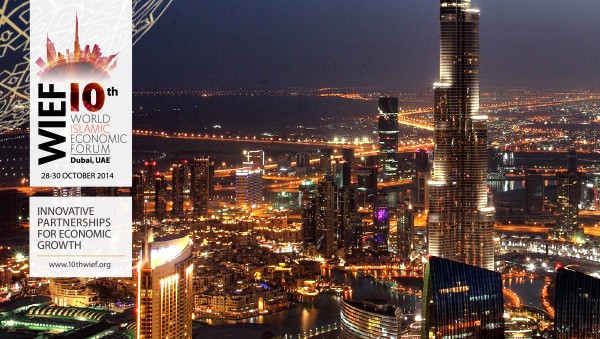
An Interview With Me From The 10th World Islamic Economic Forum (WIEF)

Thursday, November 13th, 2014
The Host Organiser of the 10th World Islamic Economic Forum, the foremost meeting place for the global business community to uncover the opportunities and potential in the Muslim world, has interviewed me here:
“Business Management In A Globalised World”

141028 WIEFBusiness Management In A Globalised World

10th WIEF Dubai

The Parisian Paradox

Wednesday, October 8th, 2014

In the past week, a UK retail executive slates France, describing Garde du Nord station, “the squalor pit of Europe”. The French Prime Minister, Manuel Valls, on a visit to London retaliates, accusing the same UK executive of having drunk too much beer. A Boston Consulting Group survey suggests London and New York by quite some margin is a greater magnet for  internationally mobile executives and employees than Paris. Should we be worried or is this knockabout “entente cordiale” chatter? After spending the past few days in Paris, here is my observations:

  • Paris has become a far more international city (almost every retail outlet has people under the age of 40 voluntarily speaking English, almost unheard of in 1994)
  • Customer service and responsiveness varies wildly (it is still a pleasant yet rare event, to see front line staff, predominantly local, offering to resolve and take ownership of service issues)
  • Technological innovation is slow and you would hardly call Paris a well-networked city (WiFi and other technology is still very fragmented in public spaces)
  • Traditional private sector businesses and local workforce expectations are being challenged like never before (availability of work, jobs and reliance on careers for life). The traditional employer-employee bond is mired in mistrust and suspicion about management and shareholders’ intentions.
  • There is an insouciance in the public sector (rail, energy, utilities) with still little visible change of mindset about the need to dramatically improve the customer experience or adapt working practices
  • Working for an International versus a French employer is less viewed as a financial decision, more a pragmatic move (increasing job and career mobility)
  • In a competitive global jobs market, Paris faces an unparalleled challenge retaining smart “twenty something” people, who increasingly love the drive and passion of an Anglo-centric “freedom to fail” business culture (the Sunday evening, “le weekend” commuters on the Eurostar are at unprecedented levels)
  • Recovery will not truly have set in until there is a net inflow of these entrepreneurs and executives (many though are increasingly laying down roots in London or New York and committing to longer-term stays upto 10+ years, so the bounce back will be slow)
  • It remains the capital of the world’s 5th largest economy but you sense it fears the speed with which newer capital cities are attracting inwards investment, jobs and appeal (there is no obvious vision of a Paris 2020) by comparison to a Dubai, Singapore or dare I say it, a London.
  • Paris’s prominence in luxury fashion and culture remains but its’ relevance in global knowledge sectors (technology, financial services, professional services, healthcare and education) is declining
  • There are standards of public behaviour, which are demonstrably more liberal than almost every major global city (attitudes to sex, adherence to laws and ethical “norms”)
  • Investment in infrastructure (public transportation, new high quality offices and housing) is anemic
  • Paris has been more successful than London in attracting larger numbers of Asian tourists (less visa obstacles) but less visibly successful in attracting their inwards direct investment in business (high start-up costs)
  • While hotels might on average be cheaper than New York, London, Hong Kong or Tokyo, eating out and transportation is arguably more expensive for visitors
  • Ultra high net worth French families are continuing to move to less penal tax locations (London, Switzerland), while shoring up their affairs from assertive tax inspectors (more complex transfer of trusts to places like Hong Kong and Singapore) and consciously guarding their wealth (more private sale purchases through third parties and less activity at public auctions)
  • There is visibly a greater willingness to embrace international investment / sponsorship of previously “off limits” French cultural, sporting and nationally important events (Qatari investment in football clubs, horse racing; Nike in athletic events; Deutsche Bank in major art shows)
  • High fixed labour costs and regulations in Paris will increasingly see SME businesses and investors prioritise the digital sales channel for short-term export-driven growth
  • Government policies and prohibitive taxation are leading to a prevailing business culture of “caution”, not great for a surge in top line revenue growth or a rebound in economic confidence
  • Paris remains equally an idiosyncratic (culturally diverse) and frustrating (bureaucratic) place to live, work and start a business but a fabulous place to visit and find one-of-a-kind experiences

© James Berkeley 2014. All Rights Reserved

An Interview with Me From TheStreet.com

Thursday, September 11th, 2014
The Street, the financial media publication providing actionable ideas from the world of investing, finance and business has interviewed me here:
“China’s Economy to Surpass U.S.: When and Why It Matters”

http://www.thestreet.com/story/12871636/1/chinas-economy-to-surpass-us-when-and-so-what.html


Focused Client Acquisition: The 3 “i”s

Thursday, August 21st, 2014

When we talk about geographic markets representing high growth opportunities (“China represents the biggest opportunity of yours and my lifetime”, Andrew Cosslett, past CEO of global hotel chain IHG), I sense all too often  we confuse the listener and obscure the actual opportunities. In reality, the growth environment (macro: government policy, taxation and micro: education, wealth, mobile phone usage, productivity)  and the abundance of opportunities is very specific to certain regions or cities. The same happens when we talk about the products or markets we serve, the customers we intend to focus on and the industries we assume represent the most attract opportunities.

For example, Italy might be considered by many international investors and corporate executives, a country immersed in excessive public and private debt, political ineptitude and largely an ageing, unproductive workforce. Yet scratch below the surface and take a look in Northern Italy, particularly in or around Milan, and you find some great businesses (mechanical, food, fashion and so on) with tremendous growth potential. As the  President of a successful local bank, Banca Di Piacenza, reminded me today that potential may increasingly be in international markets and appeal more to foreign companies or private equity investors but they are far from the “basket cases” that many in the international media might present.

I think we need to think about, talk about and act on growth market opportunities with more of a “laser focus” (3″i”s):

Ideal Client: in a corporate organisation, who are they by name, title, position of influence, control of budget? In a retail business, what level of education, wealth, technological prowess, aspiration, affiliation and buying habits sets them apart from others?

Ideal Influence: where do they hang out, who do they listen to, who do they take advice from, what do they read, who do they aspire to be, who do they see as peers and so on

Ideal Timing: where are they most comfortable, where are they least distracted, when do they have most “free” time, what changes present the best opportunities, when can we predict they are looking for help, when are we best positioned to address the need

I confidently predict that if you take any current marketing plan or list of high potential buyers and apply the laser focus, you will surprise yourself by the dramatic impact on your top line revenue growth, the reduction in client acquisition overhead (time and money) and the bottom line (the flow throw from your marketing spend into cash in the bank). You will thank me many times over.

© James Berkeley 2014. All Rights Reserved.